How to Manage Enterprise Kubernetes Workloads Beyond HPA: Eliminating Scaling Lag
Author: Thomas Mathew (opens in a new tab) Date: January 30, 2026
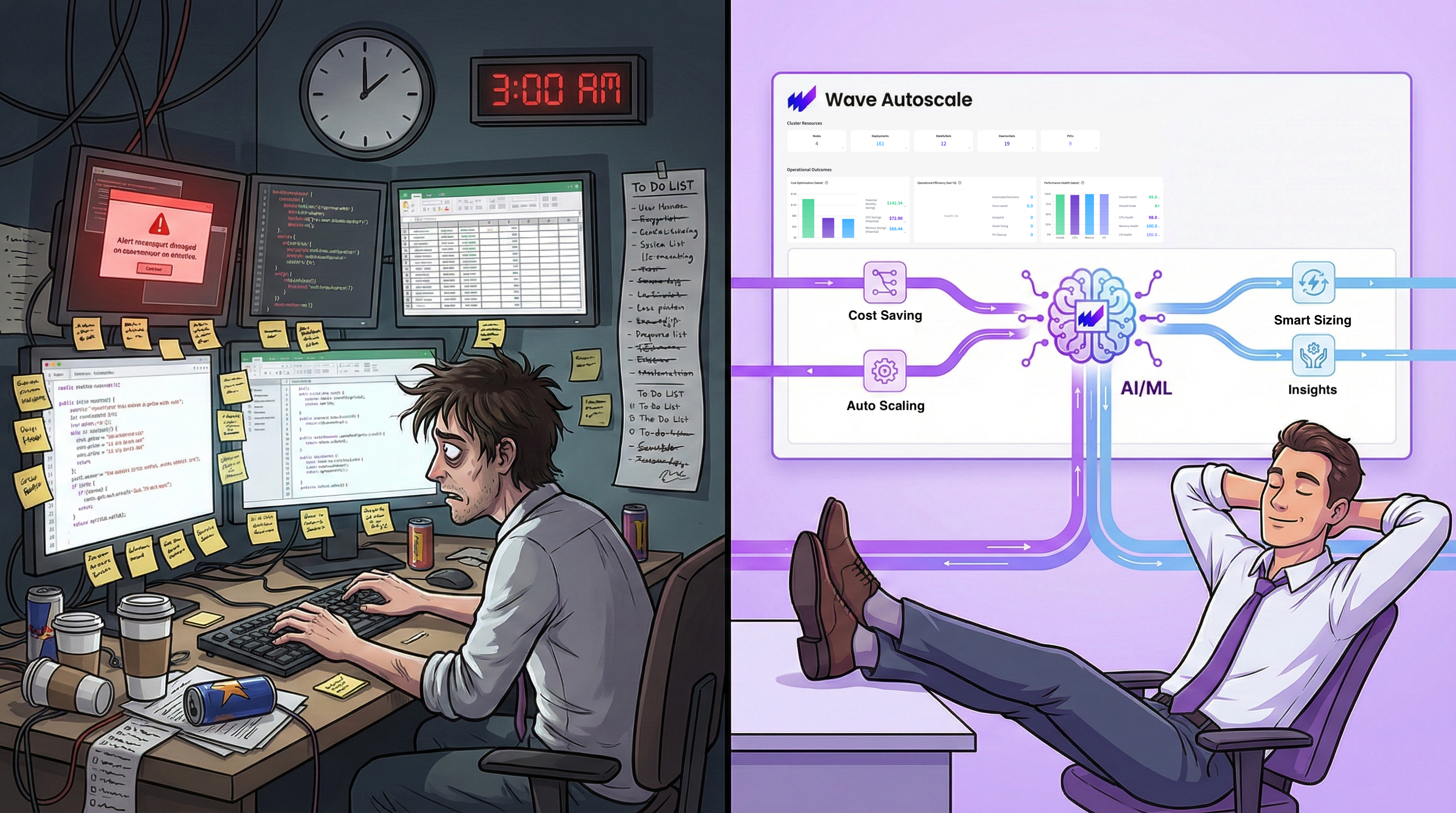
Your Black Friday sale launches at midnight, and as expected, traffic surges to 10x normal levels within minutes. Your Kubernetes HPA detects the spike and begins scaling pods to handle the increased load. However, by the time new capacity becomes available, 38% of incoming requests have already failed.
This scenario isn't just a technical failure, it's a systemic problem with how organizations manage Kubernetes workloads.
This article demonstrates why HPA's threshold-based approach fails under real-world traffic patterns and how ML-driven autoscaling eliminates these performance problems.
The HPA Problem: Threshold-Based Scaling's Fatal Flaw
How HPA Makes Scaling Decisions
HPA uses a simple formula to determine replica counts:
desiredReplicas = ceil[currentReplicas × (currentMetricValue / targetMetricValue)]For example, if you have 4 replicas running at 85% CPU and your target is 50%:
desiredReplicas = ceil[4 × (85 / 50)] = ceil[6.8] = 7 replicasThis reactive formula only triggers scaling after metrics cross thresholds.
Traditional autoscaling forces organizations into an impossible choice: maintain expensive excess capacity or accept degraded performance during traffic spikes.
The Under-Provisioning Risk
Conservative autoscaling thresholds (70-80% CPU) minimize wasted capacity but create performance risks. When threshold-based scaling finally triggers, pods are already overwhelmed:
- 38% error rate with 24-second wait times during sudden traffic spikes
- Service degradation before scaling even begins
- Users experience failures while HPA "discovers" it needs to scale
The core problem: HPA can only react to what already happened. By the time CPU crosses your threshold, your application is already under stress. Then the 60-120 second delay from detection → scaling decision → pod creation → pod ready means users always suffer first.
The Over-Provisioning Waste
Aggressive thresholds (50-60% CPU) provide more headroom but waste substantial resources. Organizations maintain 40-50% excess capacity during normal operations "just in case."
For a company running 200 microservices on AWS EKS:
- Average pod resource cost: $50/month
- Constant waste during normal operations
- "Safety margin" that still fails during unexpected spikes
Even with aggressive over-provisioning, HPA still reacts too slowly during rapid traffic changes. You're paying for excess capacity that doesn't eliminate the fundamental scaling lag.
The Impossible Choice
HPA offers no middle ground:
- Conservative settings: Lower costs, but users experience errors during traffic spikes
- Aggressive settings: Better headroom, but constant resource waste and still reactive
There's no learning, no pattern recognition, no anticipation, just endless reaction to conditions that already occurred.
Why Traffic Patterns Defeat Threshold-Based Scaling
HPA's fundamental limitation isn't poor configuration, it's the inability to learn from patterns:
- Daily cycles: Traffic varies by time of day, day of week, season
- Event-driven spikes: Product launches, marketing campaigns, viral content
- Gradual drift: User behavior changes over weeks and months
- Service dependencies: Upstream changes affect downstream scaling needs
HPA treats every spike as a surprise. It has no memory, no learning, no anticipation, just reactive response to thresholds already crossed. Settings optimized for one pattern fail under another.
The Wave Autoscale Approach: ML-Driven Workload Management
Wave Autoscale fundamentally changes the economics of Kubernetes workload management by eliminating the operational burden while simultaneously improving performance and reducing costs.
Intelligent Performance Modeling
Rather than asking "Is CPU above 80%?" the threshold-based approach of HPA, Wave Autoscale's ML-driven performance model asks: "How many replicas will maintain our target P95 latency under current request patterns?"
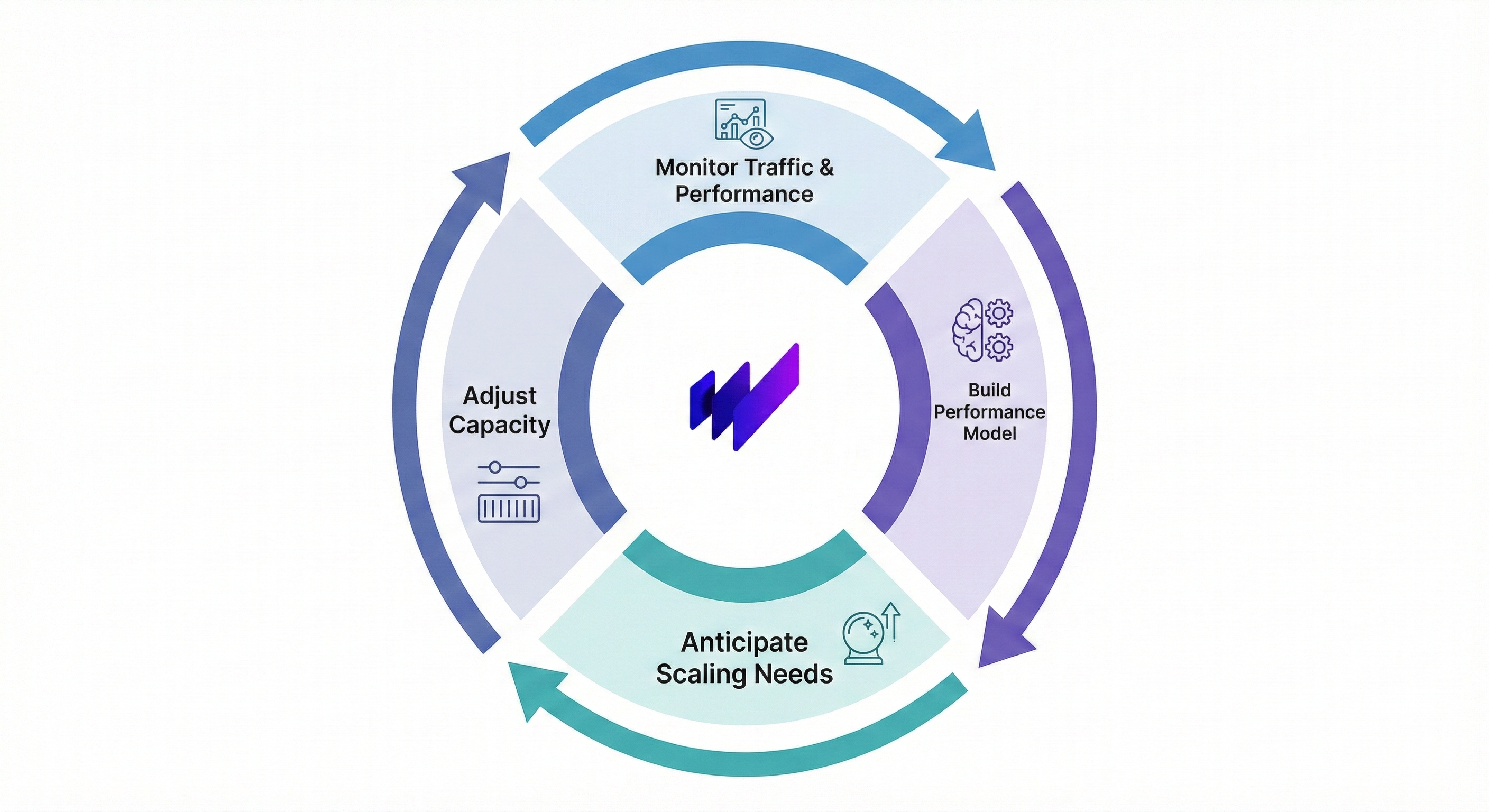
This shift from threshold monitoring to performance modeling enables several critical capabilities:
1. Continuous Learning
Wave Autoscale analyzes real-time metrics continuously. The system builds a performance model specific to each workload, understanding the relationship between replicas, resource allocation, and actual performance outcomes.
2. Forward-Looking Scaling Decisions
By understanding how workloads behave under various conditions, Wave Autoscale anticipates scaling needs before performance degrades. The 60-120 second scaling delay still exists, that's a Kubernetes architectural constraint. But it no longer impacts users. Capacity becomes ready before traffic arrives, not after users are experiencing errors.
3. Unified Horizontal and Vertical Optimization
Wave Autoscale manages both pod replica counts (HPA) and resource allocation (VPA) in a unified manner, eliminating the conflict between these two systems and ensuring optimal resource efficiency.
Performance Benchmarks: Quantifying the Improvement
To demonstrate the performance gap between traditional HPA and ML-driven workload management, we conducted controlled benchmark tests comparing the two approaches under identical conditions.
Test Environment
- Cluster Configuration: Kubernetes cluster with standard node types
- Application Under Test: Stateless node.js web service representative of typical production workloads
- Baseline Configuration:
- HPA with 50% CPU utilization target
- Wave Autoscale with Stabilization Window at 60s and 30s warming up time
Traffic Patterns Tested
We simulated four real-world traffic scenarios that commonly challenge autoscaling systems:
➡️ Normal Load Pattern
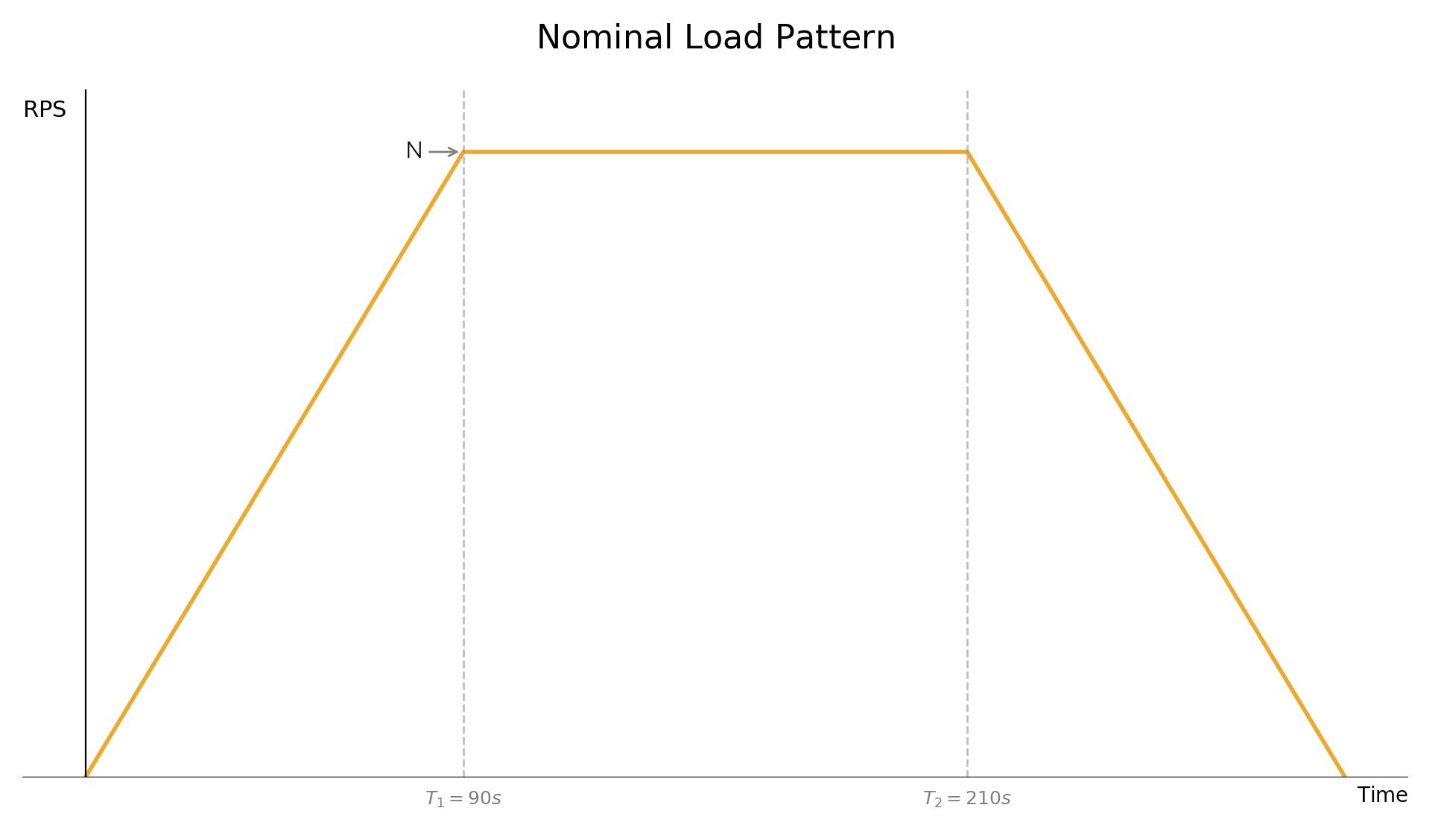
- Gradual traffic increase
- Maintain for a period
- Gradual decrease
- Finish
🚀 Long Surges Pattern
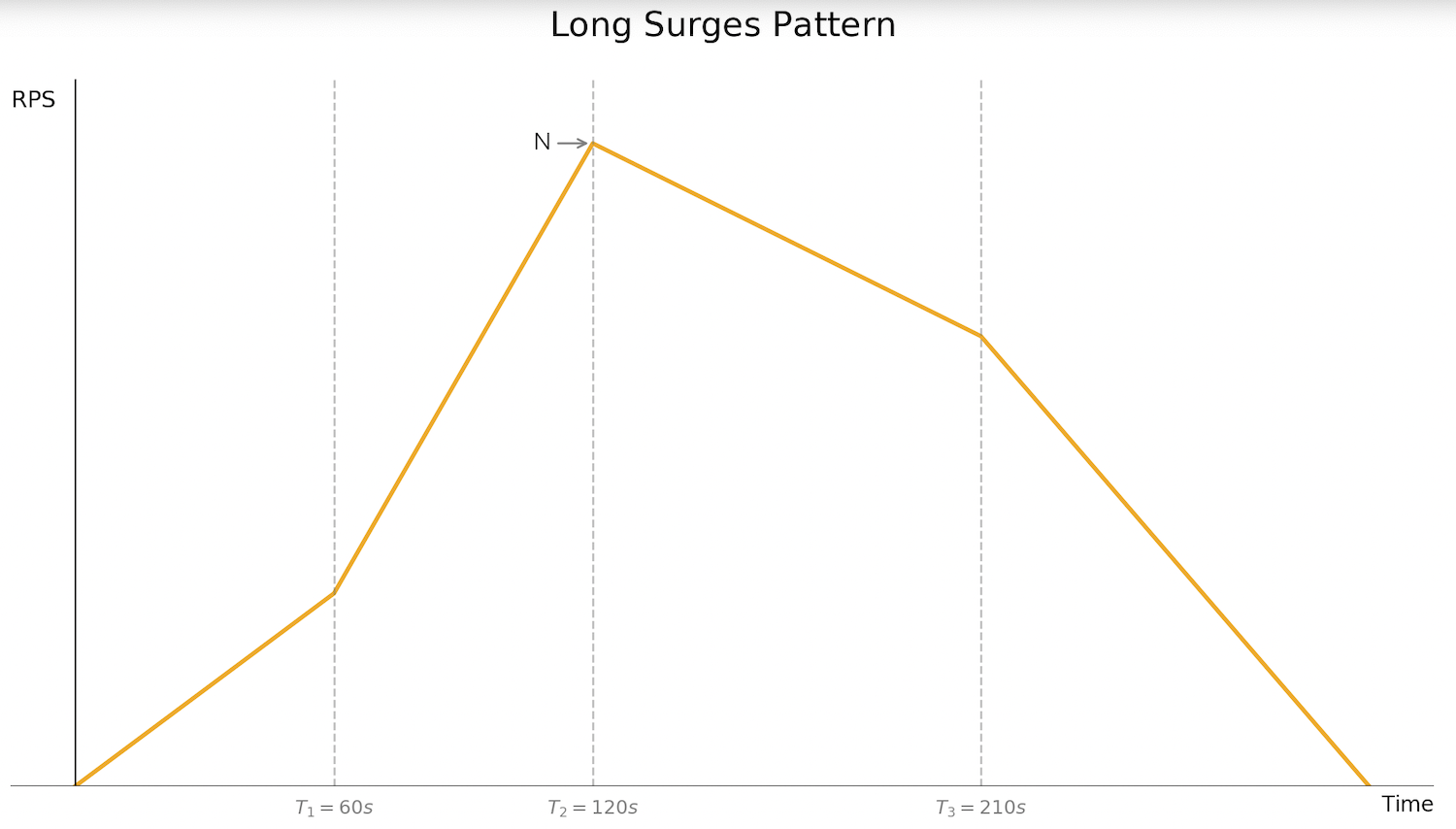
- Gradual increase
- Rapid increase at specific point
- Very slow decrease from increased state
- Finish
💥 Short Spike Pattern: The Critical Test
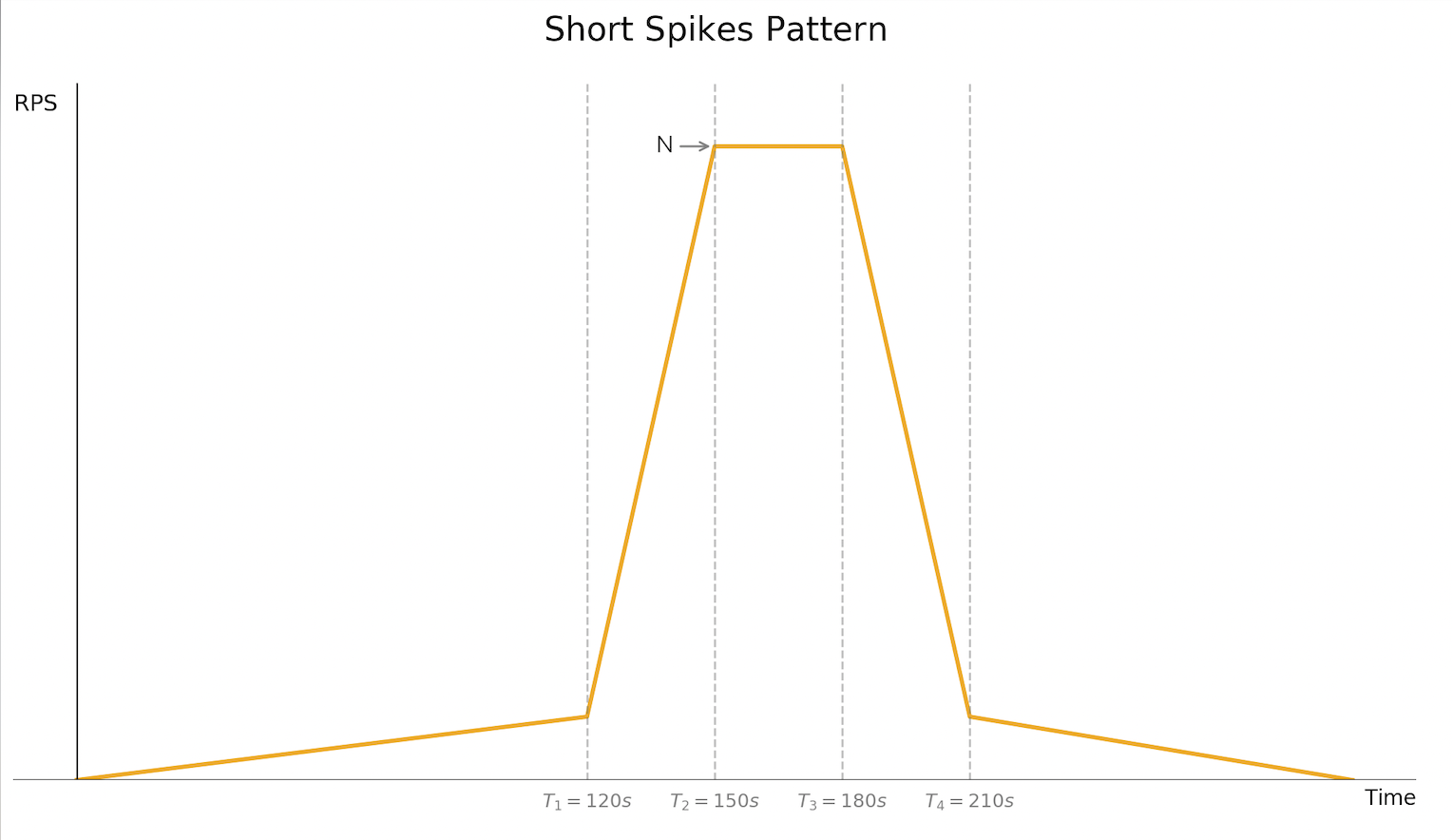
- Very slight increase
- Rapid increase for short time
- Maintain increased state
- Rapid decrease
- Finish
〰️ Wave Pattern: Cyclical Traffic
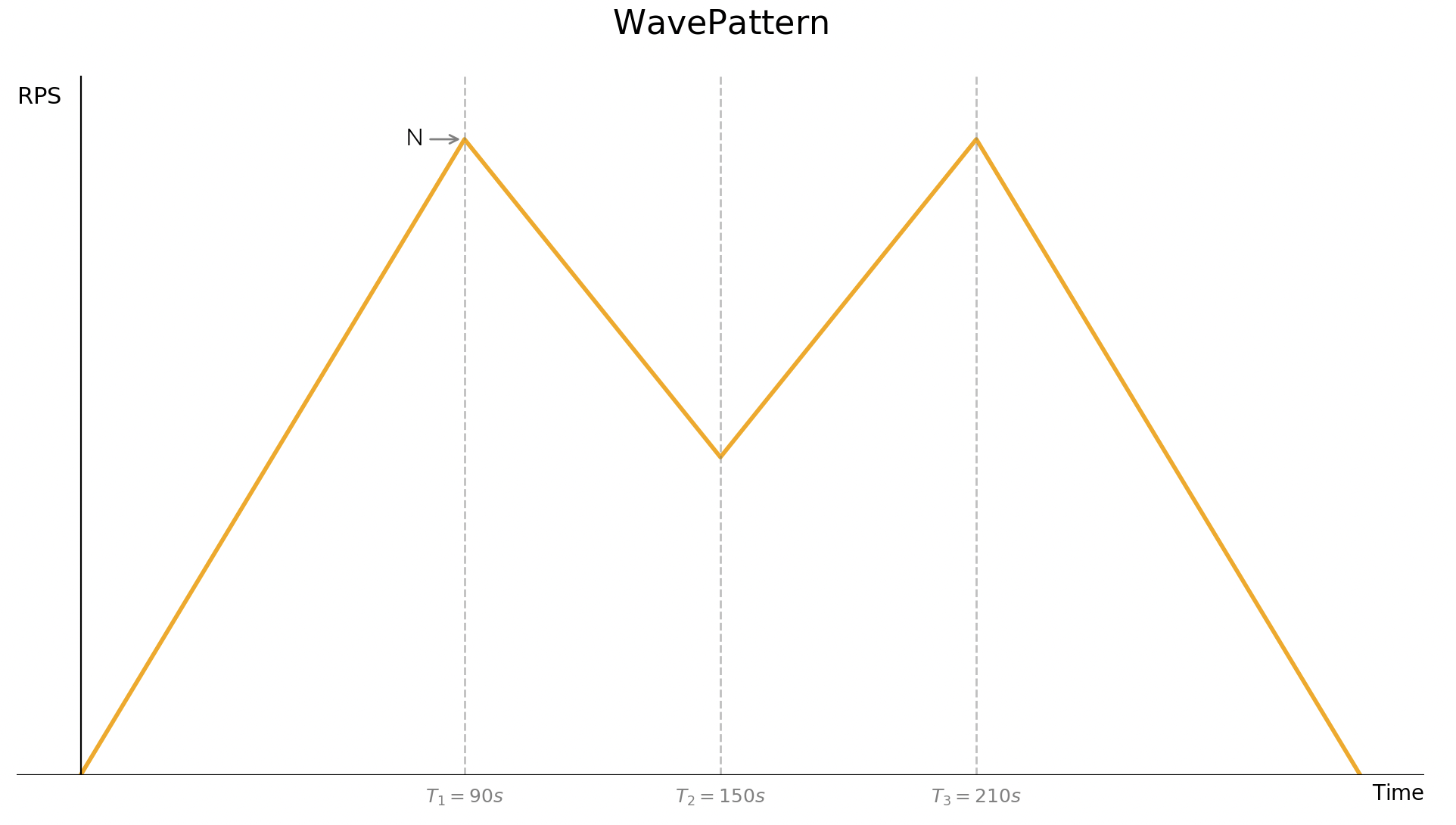
- Steady increase
- Steady slight decrease
- Increase again
- Finish
All tests ran multiple times to ensure consistency. Results focus on the most challenging scenarios where traditional autoscaling struggles most.
The Results: Dramatic Performance Improvement
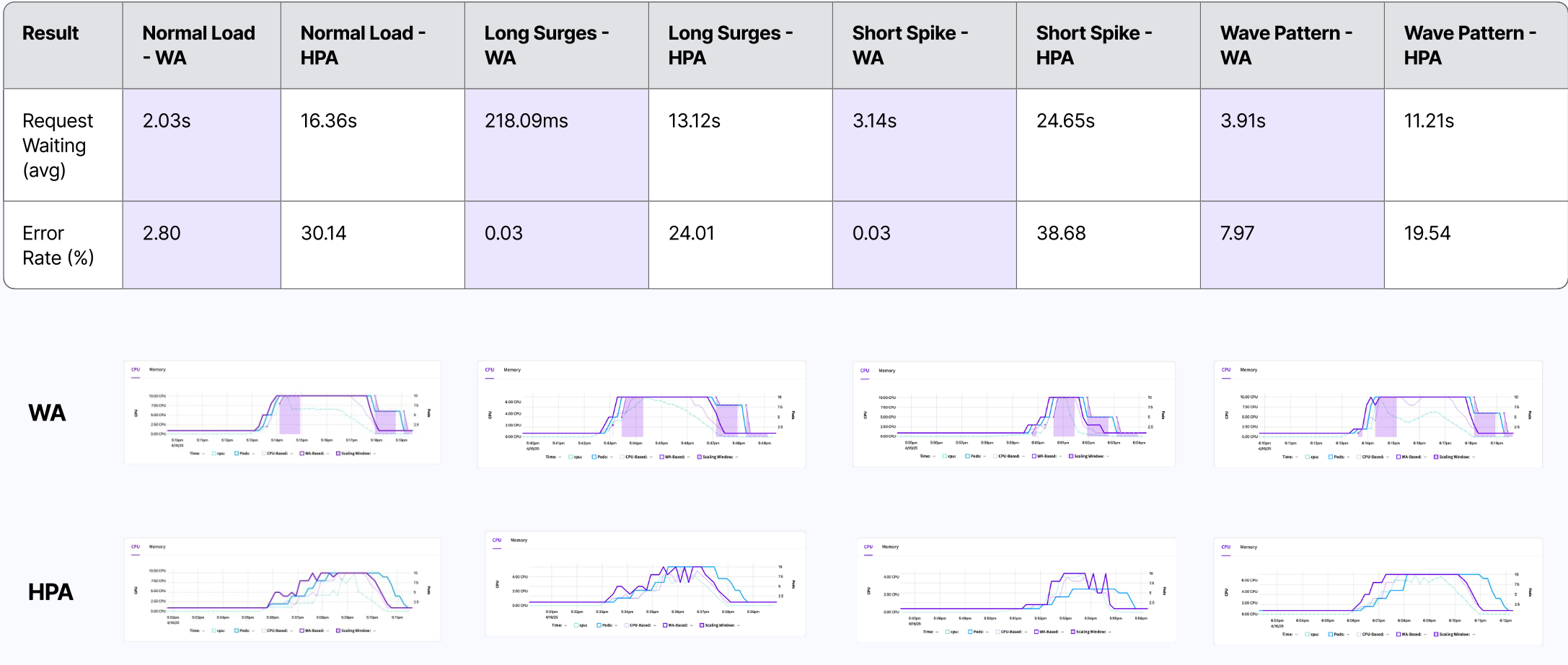
Wave Autoscale consistently outperformed HPA across all traffic scenarios, with the most dramatic differences during challenging traffic patterns.
➡️ Normal Load Pattern: Surprising Baseline Failures
Even under stable traffic with minor natural variations, HPA showed significant errors. This reveals the fundamental weakness of threshold-based approaches: conservative resource allocation leaves insufficient headroom for even minor traffic variations.
💥 Short Spike Pattern: The Critical Test
Short, sudden traffic spikes represent the most challenging scenario for autoscaling systems and where threshold-based scaling's delay causes maximum damage. More than one-third of requests failed under HPA as existing pods became overwhelmed.
🚀 Long Surges Pattern: Extended Demand Events
Sustained traffic elevations revealed similar advantages. Even during extended surges where HPA had more time to scale, threshold-based delays still caused nearly one-quarter of requests to fail.
〰️ Wave Pattern: Cyclical Traffic
Repeating traffic cycles demonstrated ML-based learning capabilities. Wave Autoscale recognized the cyclical pattern and began anticipating peaks, while HPA continued treating each peak as a new event, consistently experiencing scaling lag.
Across all traffic scenarios, Wave Autoscale delivered 65-98% faster response times and 59-99.9% fewer errors compared to HPA.
Detailed Scaling Behavior Analysis
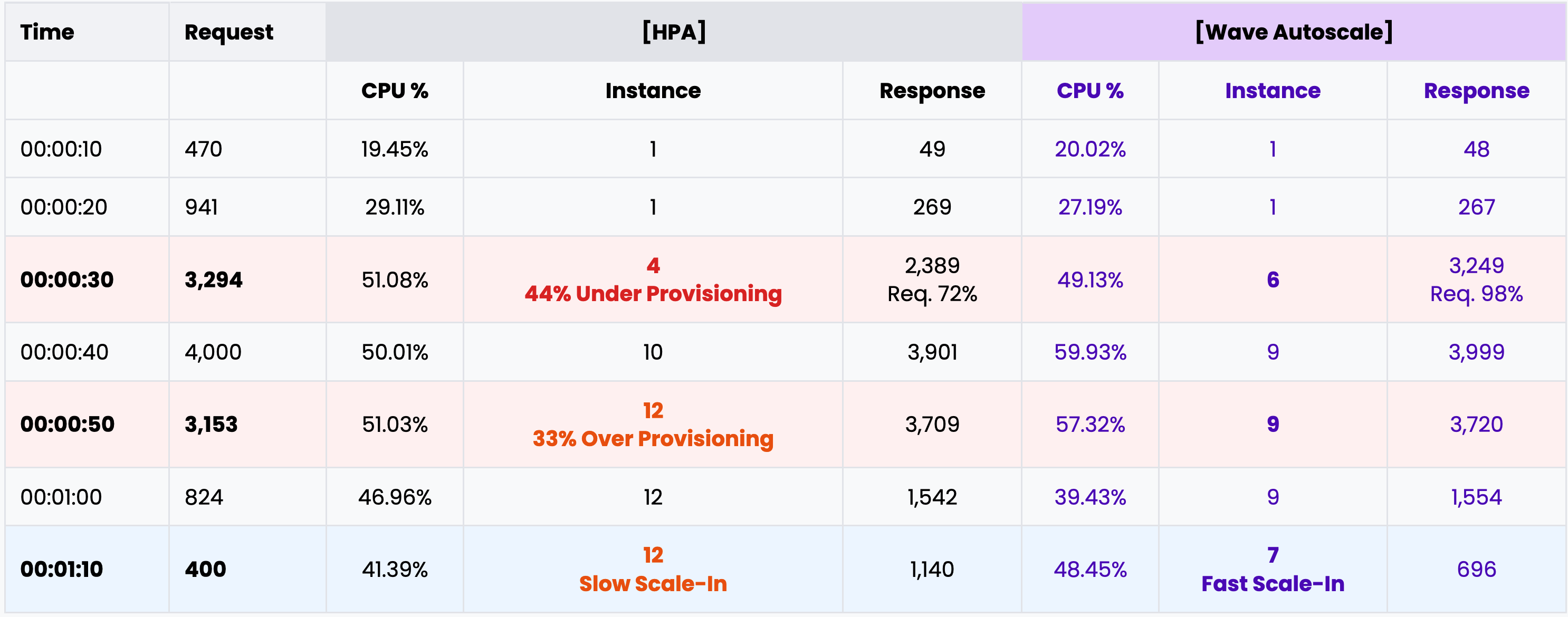
The table above captures moment-by-moment scaling behavior during a traffic spike, revealing three critical advantages of Wave Autoscale's approach:
Under-Provisioning Crisis
Over-Provisioning Waste
Faster Scale-In
Conclusion: When Autoscaling Actually Works
Traditional Kubernetes autoscaling was designed for a simpler era. The threshold-based approach made sense when clusters ran a handful of services with predictable traffic. Modern enterprise organizations operate at a different scale: hundreds of microservices, complex traffic patterns, stringent performance requirements, and constant pressure to reduce costs.
Wave Autoscale eliminates this operational burden through ML-driven workload management that learns your traffic patterns, anticipates scaling needs, and optimizes resource allocation continuously without human intervention.
For enterprise organizations managing complex Kubernetes deployments, the question isn't whether to adopt intelligent workload management, it's how quickly you can reclaim your engineering team's productivity and eliminate the hidden costs of traditional autoscaling.
Get Started
Ready to eliminate operational toil and improve Kubernetes performance?
Learn more about Wave Autoscale at wavek8s.com (opens in a new tab) or contact our team to discuss your specific workload management challenges.