🚀 Wave Autoscale 2.7.0 Release
Author: Hwansoo Kim (opens in a new tab)
Date: July 21, 2025
Wave Autoscale 2.7.0 brings a new level of observability and external integration flexibility—empowering platform teams to unify autoscaling insights with broader infrastructure monitoring stacks, while expanding workload compatibility across environments like AWS Fargate and OpenShift.
🧩 NetFUNNEL SaaS Integration (Beta)
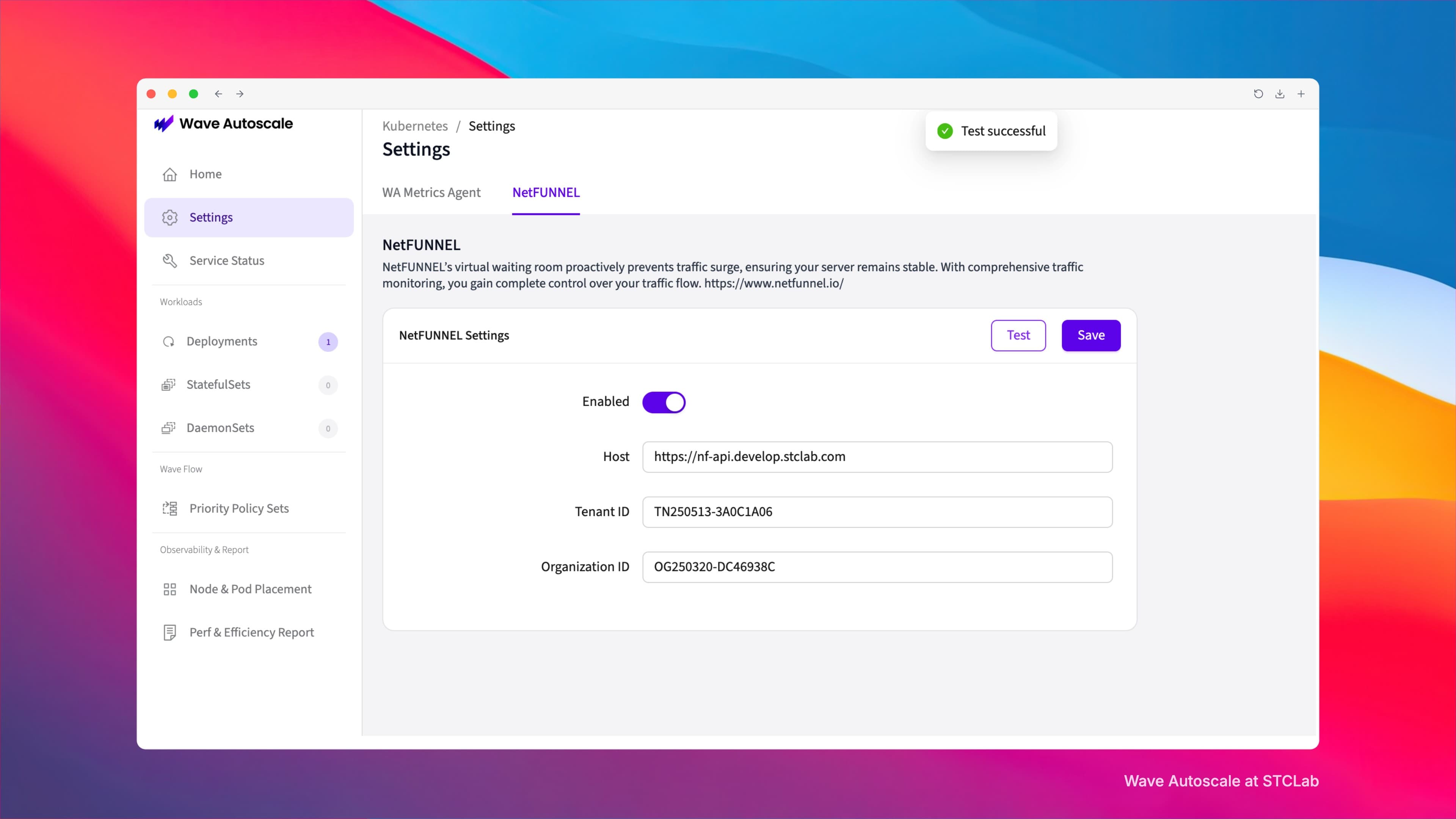
Wave Autoscale now natively integrates with NetFUNNEL (opens in a new tab)—the leading virtual waiting room system—via SaaS APIs.
- Configure NF API endpoint and organization credentials in the Wave Autoscale UI.
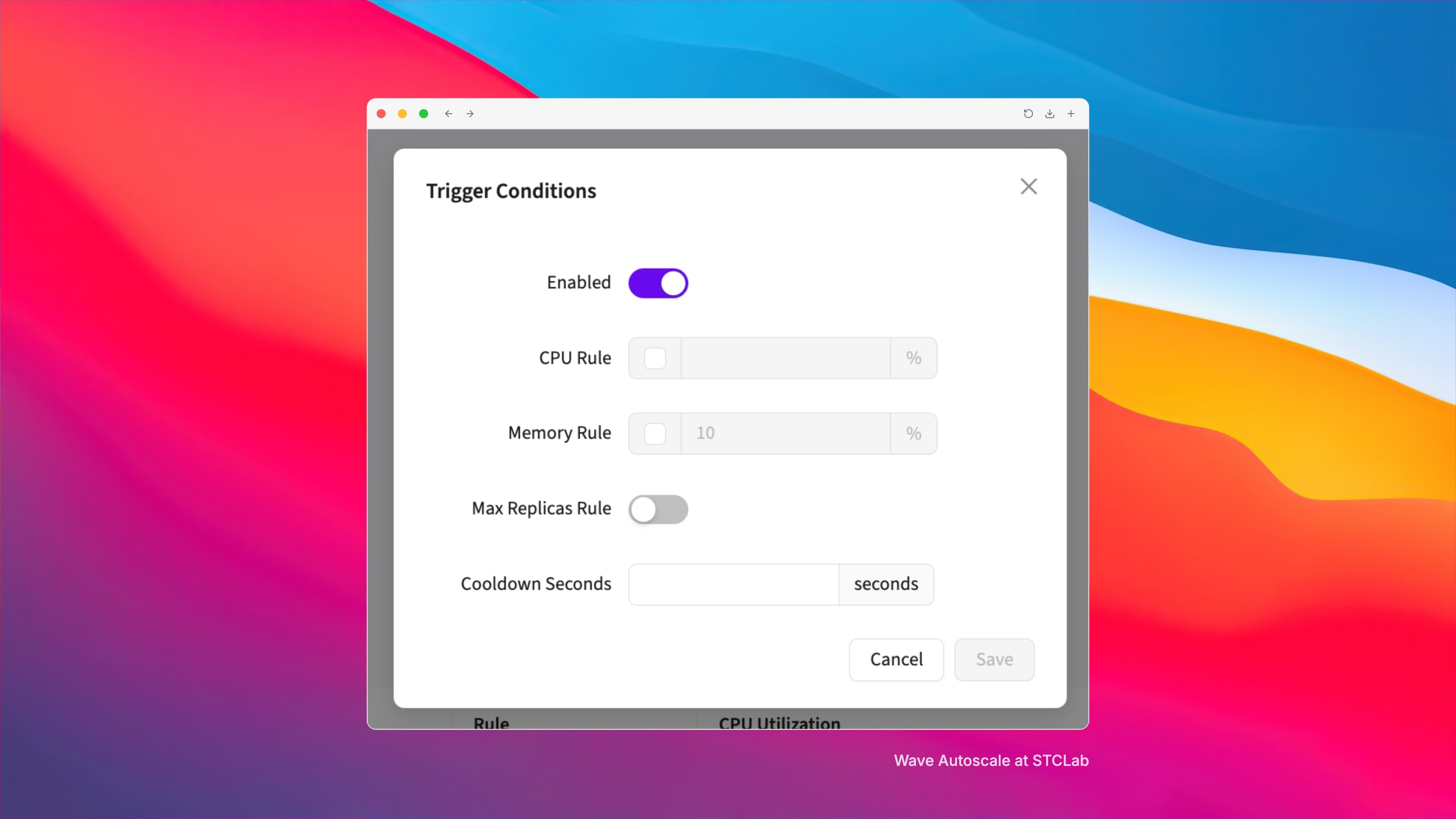
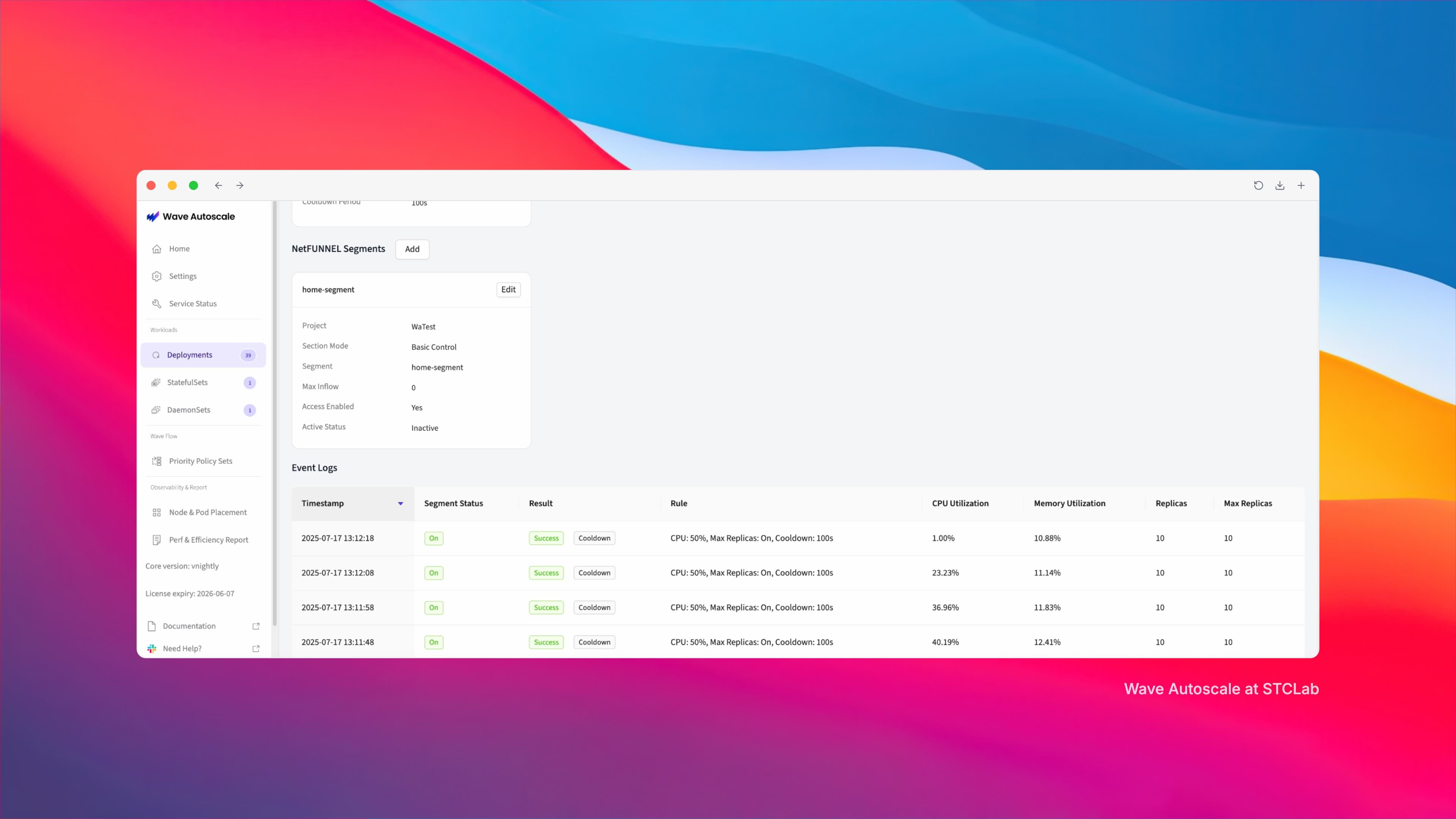
- Dynamically trigger NF protection based on scaling conditions or resource pressure.
- CPU Rule: Turn on NF if average CPU exceeds threshold.
- Memory Rule: Trigger NF based on memory usage.
- Max Replicas Rule: Activate NF when the deployment hits its maximum replica count.
- Cooldown Period: Prevent flapping by delaying NF deactivation.
- Joint operation of NetFUNNEL + Autopilot enables queue management and fast scale-out under heavy traffic.
See:
Settings → NetFUNNELtab for configuration.
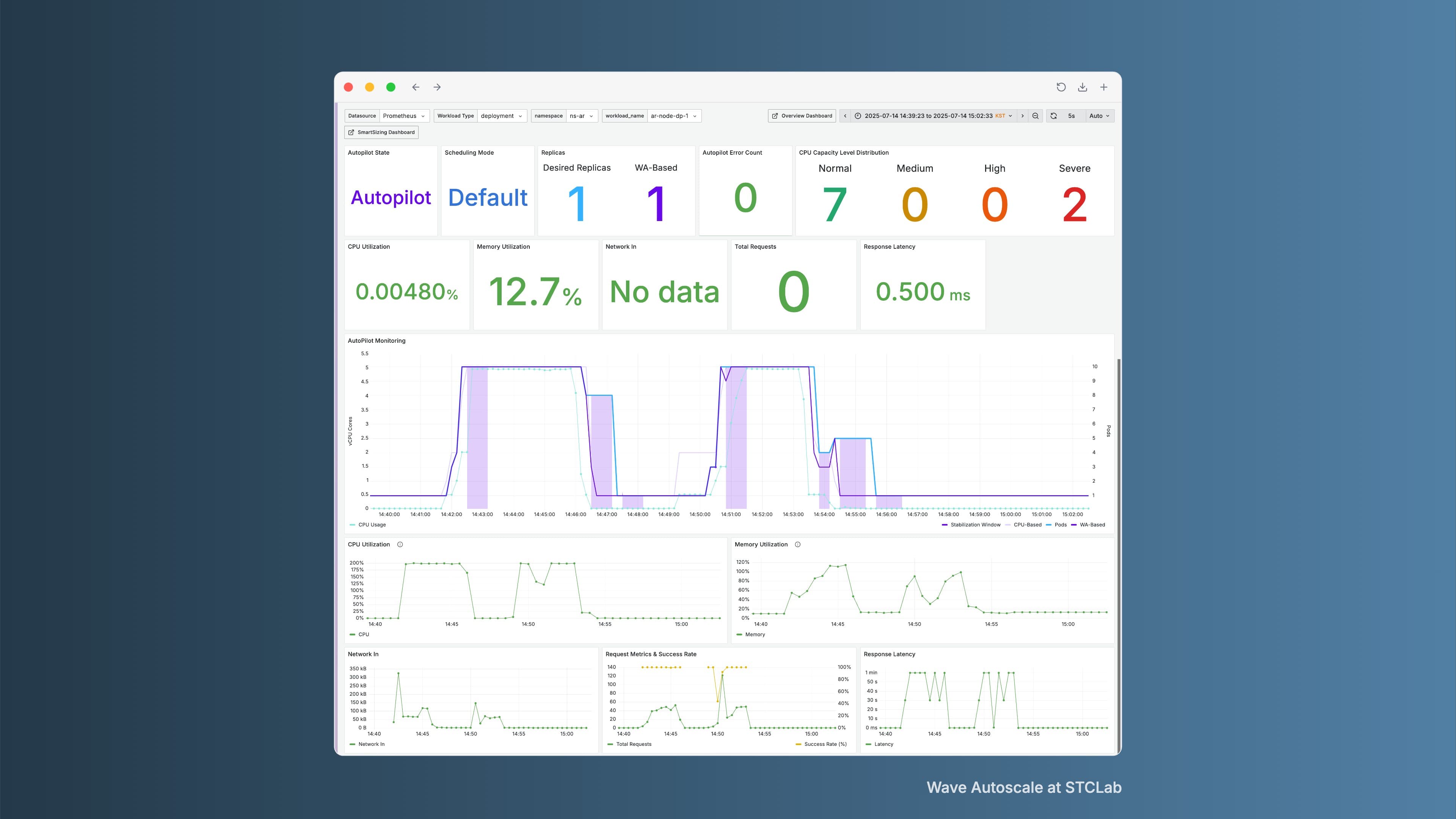
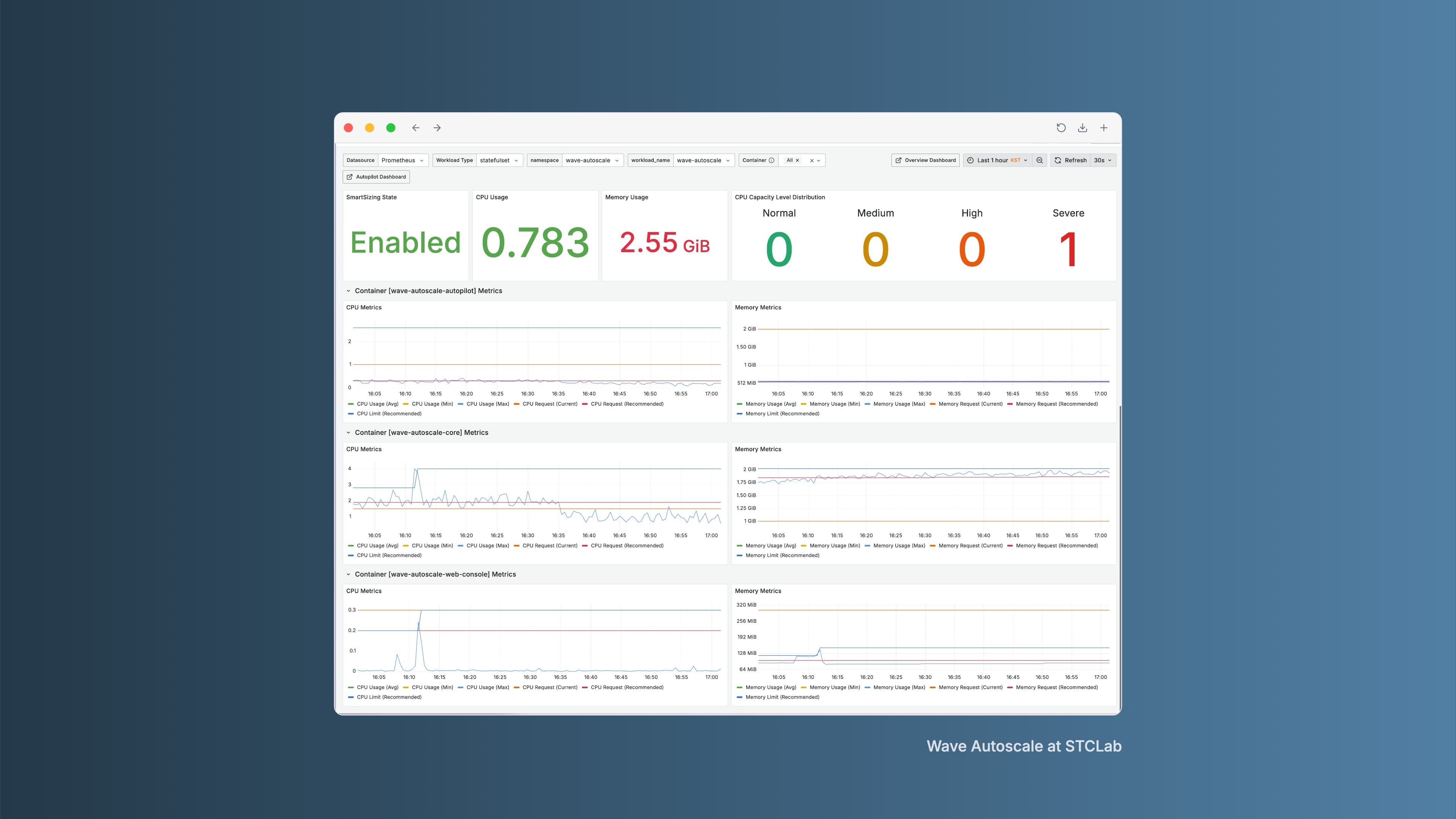
📈 Export to Prometheus + Grafana
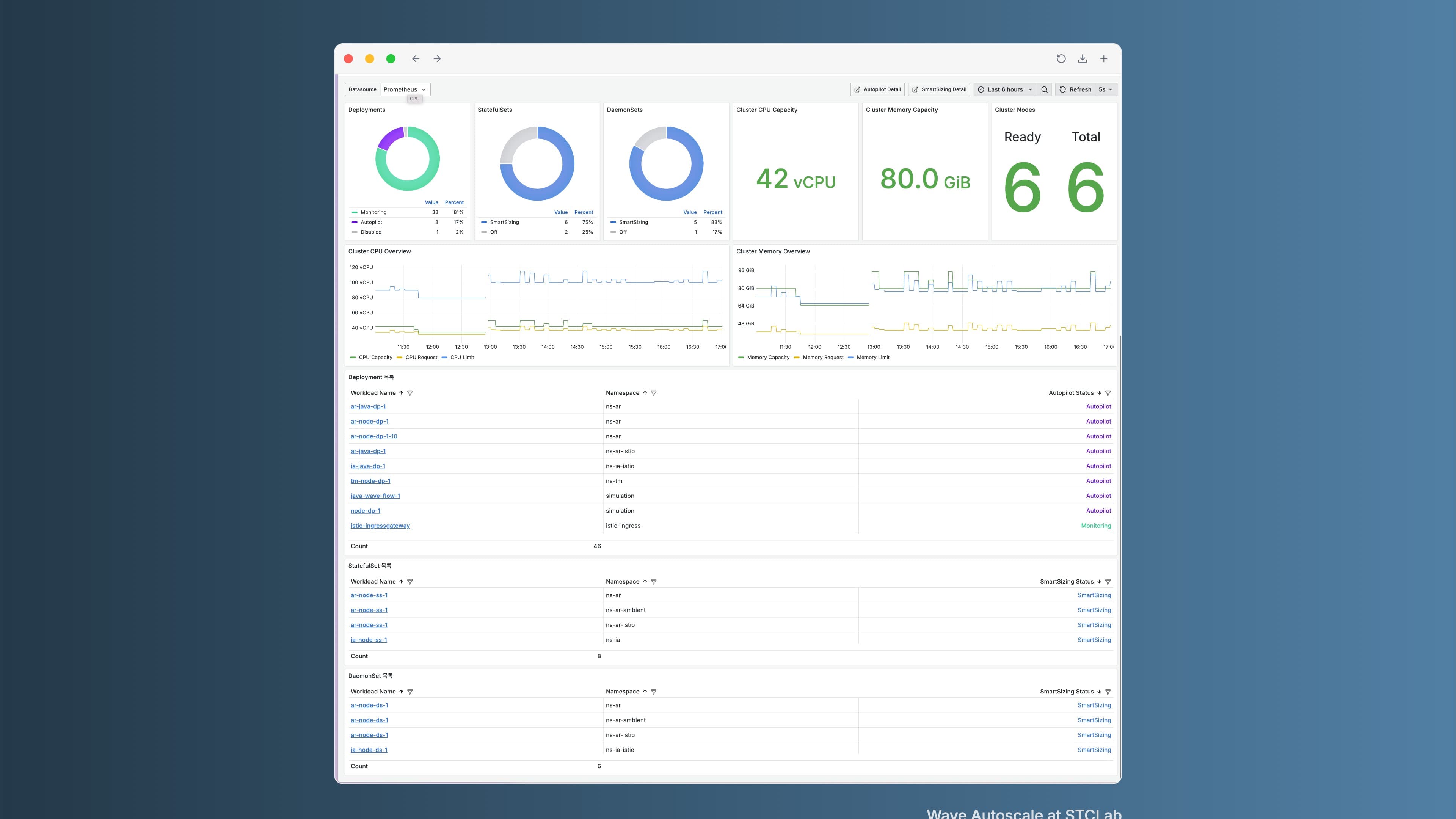
Wave Autoscale now supports exporting internal metrics and logs to Prometheus.
- Unlock Grafana dashboards with full visibility across infrastructure and autoscaling behaviors.
- Includes Autopilot model signals, smart sizing recommendations, and workload classifications.
- Enables seamless correlation with platform-wide metrics (e.g., Node conditions).
🐞 Bug Fix: Red Hat OpenShift Compatibility
- Fixed a critical issue where metrics collection failed under certain OpenShift environments due to service account and permissions mismatch.
- Ensures stable operation of WA Metrics Agent on OpenShift clusters.
☁️ AWS Fargate Node Support
Wave Autoscale now supports AWS Fargate nodes as part of its resource optimization scope.
- Monitors Fargate-based Pods.
- Enables smart scaling and metric attribution even in serverless container runtimes.
Wave Autoscale 2.7.0 continues to expand the automation surface for Kubernetes platforms—bringing observability, third-party integration, and multi-environment support into a unified control plane.